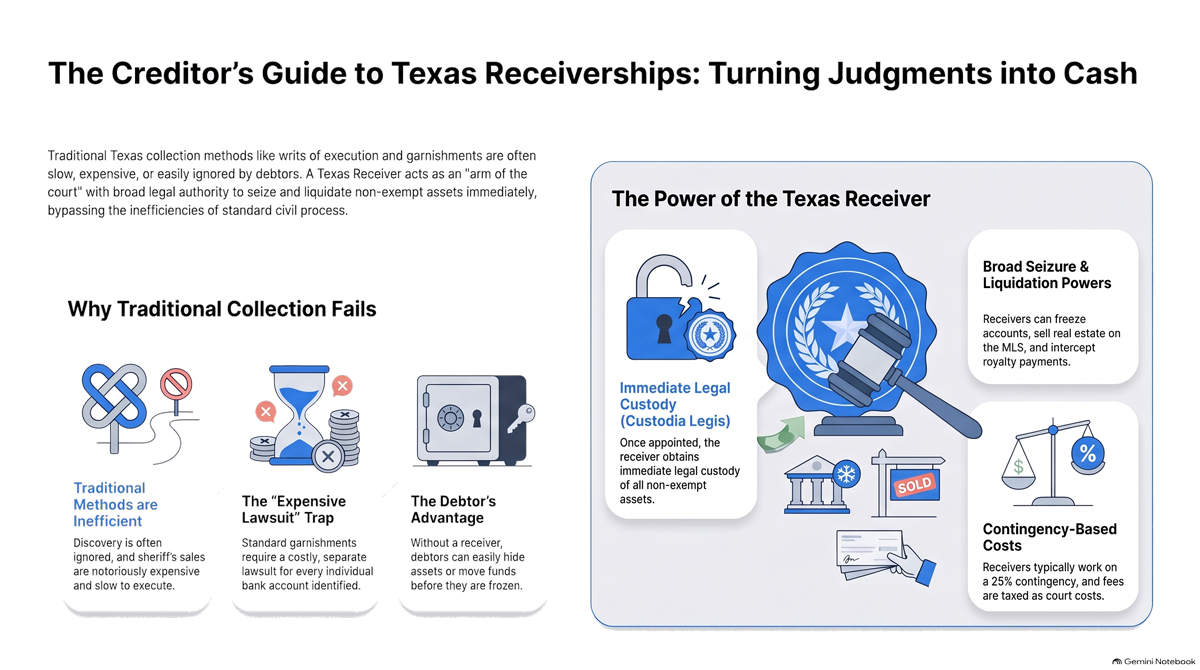
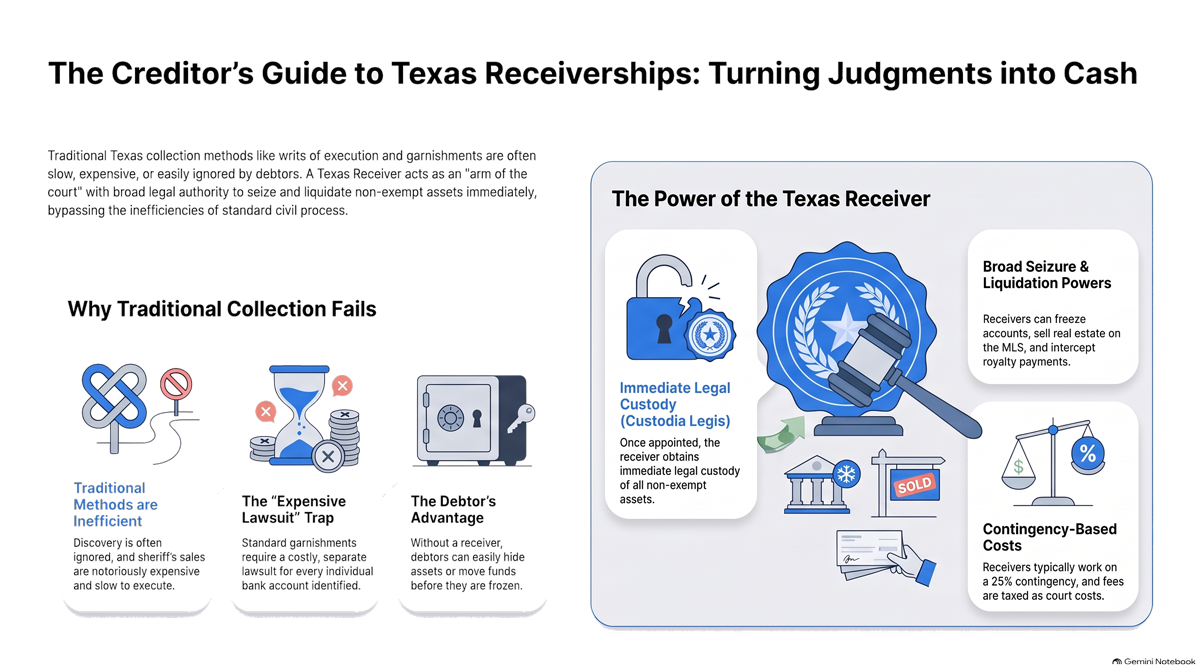
Traditional Texas collection methods like writs of execution and garnishments are often slow, expensive, or easily ignored by debtors. A Texas Receiver acts as an "arm of the court" with broad legal authority to seize and liquidate non-exempt assets immediately, bypassing the inefficiencies of standard civil process.
Why Traditional Collection Fails
Traditional Methods are Inefficient
Discovery is often ignored, and sheriff's sales are notoriously expensive and slow to execute.
The "Expensive Lawsuit" Trap
Standard garnishments require a costly, separate lawsuit for every individual bank account identified.
The Debtor's Advantage
Without a receiver, debtors can easily hide assets or move funds before they are frozen.
The Power of the Texas Receiver
Immediate Legal Custody (Custodia Legis)
Once appointed, the receiver obtains immediate legal custody of all non-exempt assets.
Broad Seizure & Liquidation Powers
Receivers can freeze accounts, sell real estate on the MLS, and intercept royalty payments.
Contingency-Based Costs
Receivers typically work on a 25% contingency, and fees are taxed as court costs.